
Why Two Investors Earning 10% Can Grow Further Apart

At a steady 8% annual return, a dollar roughly doubles in 10 years, grows to almost five dollars in 20, and exceeds twenty dollars in 40. These are hypothetical constant returns, before taxes and fees.
A $10,000 investment would grow to more than $200,000 after 40 years.
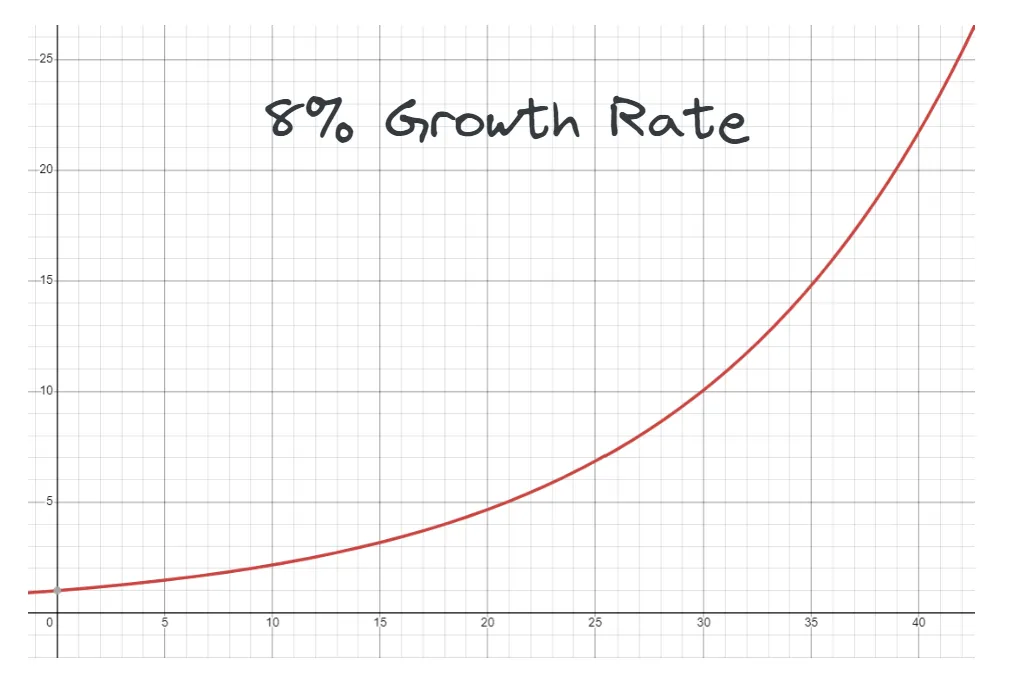
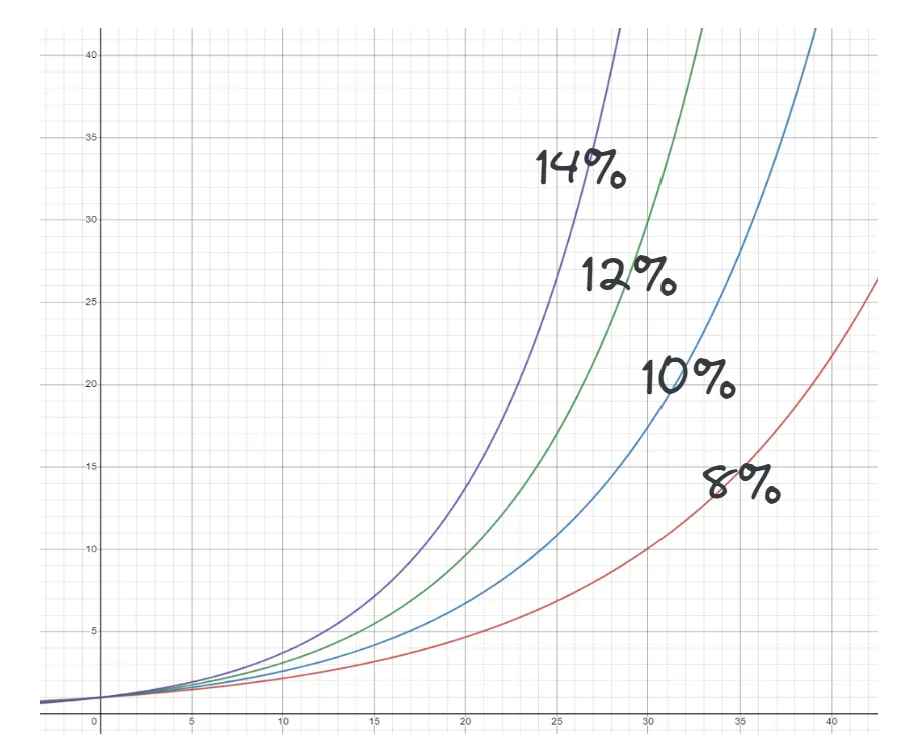
A small change in the annual rate makes a large difference over that much time.
At 10%, the same $10,000 would grow to about $450,000 after 40 years.
At 12%, it would reach about $930,000.
At 14%, it would approach $1.9 million.
Compounding helps your money grow. It can also make the dollar gap between two investors grow, even when both are doing equally well.
Someone who starts earlier has more money earning the same percentage. The gap can widen without either person changing strategy.
The same return, three years apart
Imagine John and Jane each invest $10,000 in a fund that earns exactly 10% every year.
John starts in 2020. Jane starts in 2023, three years later.
In 2030
John has $10,000 × 1.10¹⁰, or $25,937.
Jane has $10,000 × 1.10⁷, or $19,487.
The gap is $6,450.
In 2040
John has $10,000 × 1.10²⁰, or $67,275.
Jane has $10,000 × 1.10¹⁷, or $50,545.
The gap is about $16,730.
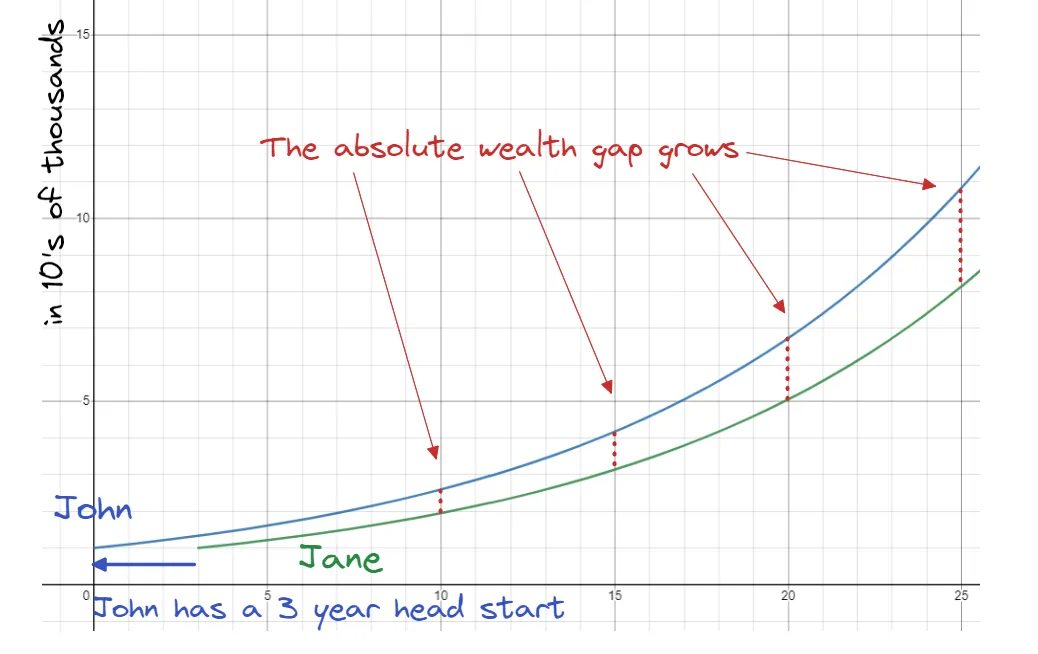
Both investors earned the same return. So why did the gap grow?
John’s larger balance earns more dollars each year at the same 10% rate. Jane is still three years behind, but that head start is now worth more money.
Their relative wealth stays in the same proportion in this example. It is the dollar gap that grows.
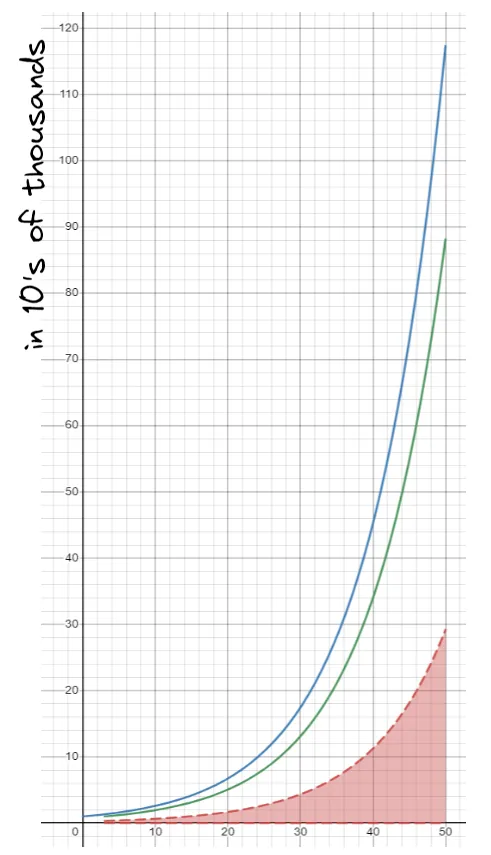
Plot their balances over time and Jane follows John’s path three years later. Shift the green line left by three years and it meets the blue line.
The widening dollar gap does not mean Jane is investing worse.
The formula below expresses that gap.

The starting investment and return are identical. Only the starting date differs.
Now plot the dollar gaps marked by the red dotted lines. The gap itself follows an exponential curve.
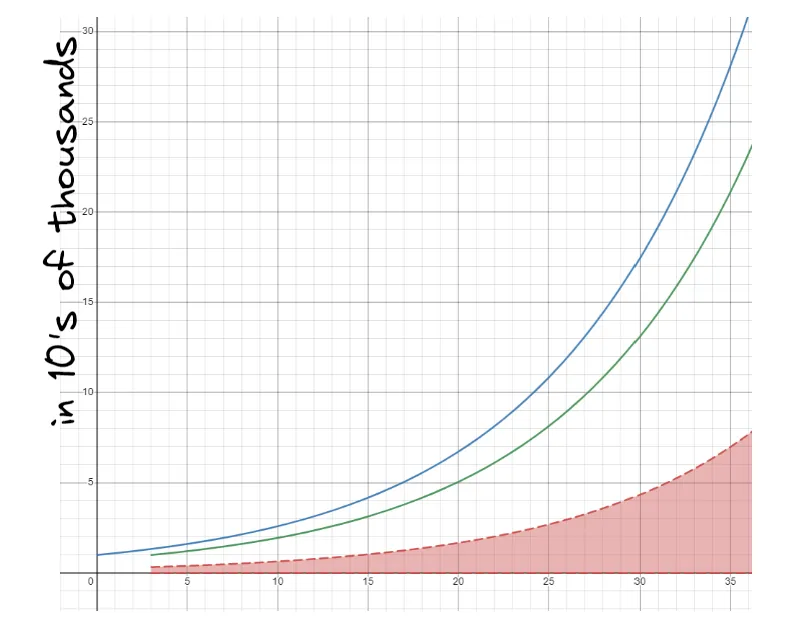
After 50 years, the same three-year head start looks like this:
Choose a goal that belongs to you
It is possible to grow your own savings and still feel as though you are falling behind.
Comparing dollar balances hides differences in starting dates, starting amounts, and what people could afford to save.
A friend who started earlier may pull further ahead even while you earn the same returns. Inherited wealth and lucky investments can make that comparison feel even less fair.
The urge to catch up can make an all-in bet tempting. It can also put the progress you have already made at risk.
Before changing your strategy, ask whether it is failing your own goals or merely failing to beat someone else’s balance.
This example explains one way a wealth gap grows; it is not a complete explanation of inequality. Its practical lesson is personal: someone else’s head start is a poor reason to make a reckless decision with your savings.